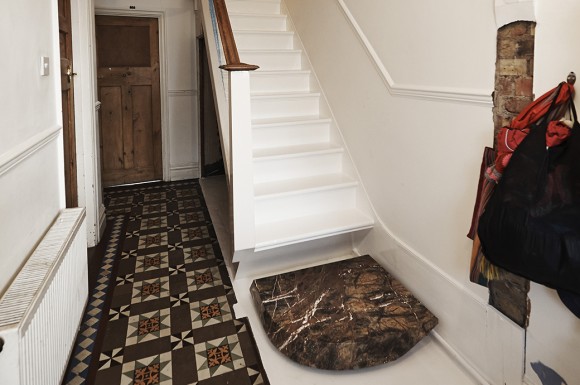
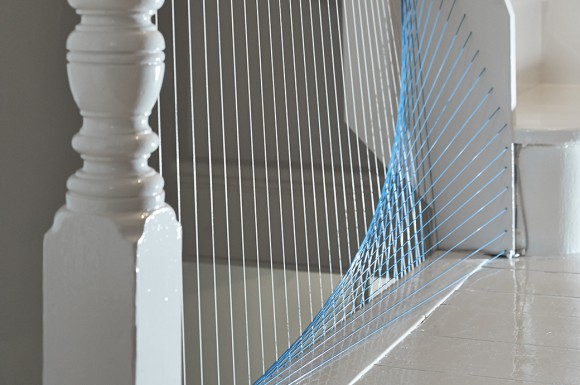
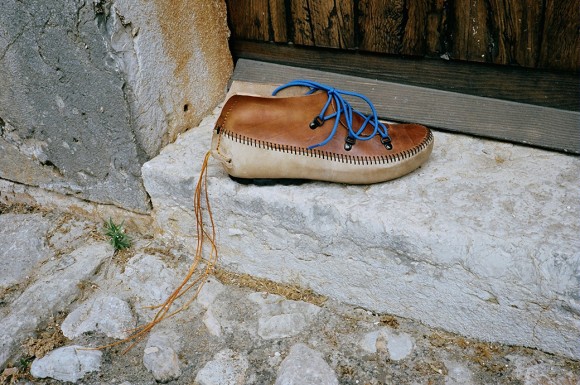
David Ross and myself were commissioned to re-design a staircase in an old victorian private home in West London.
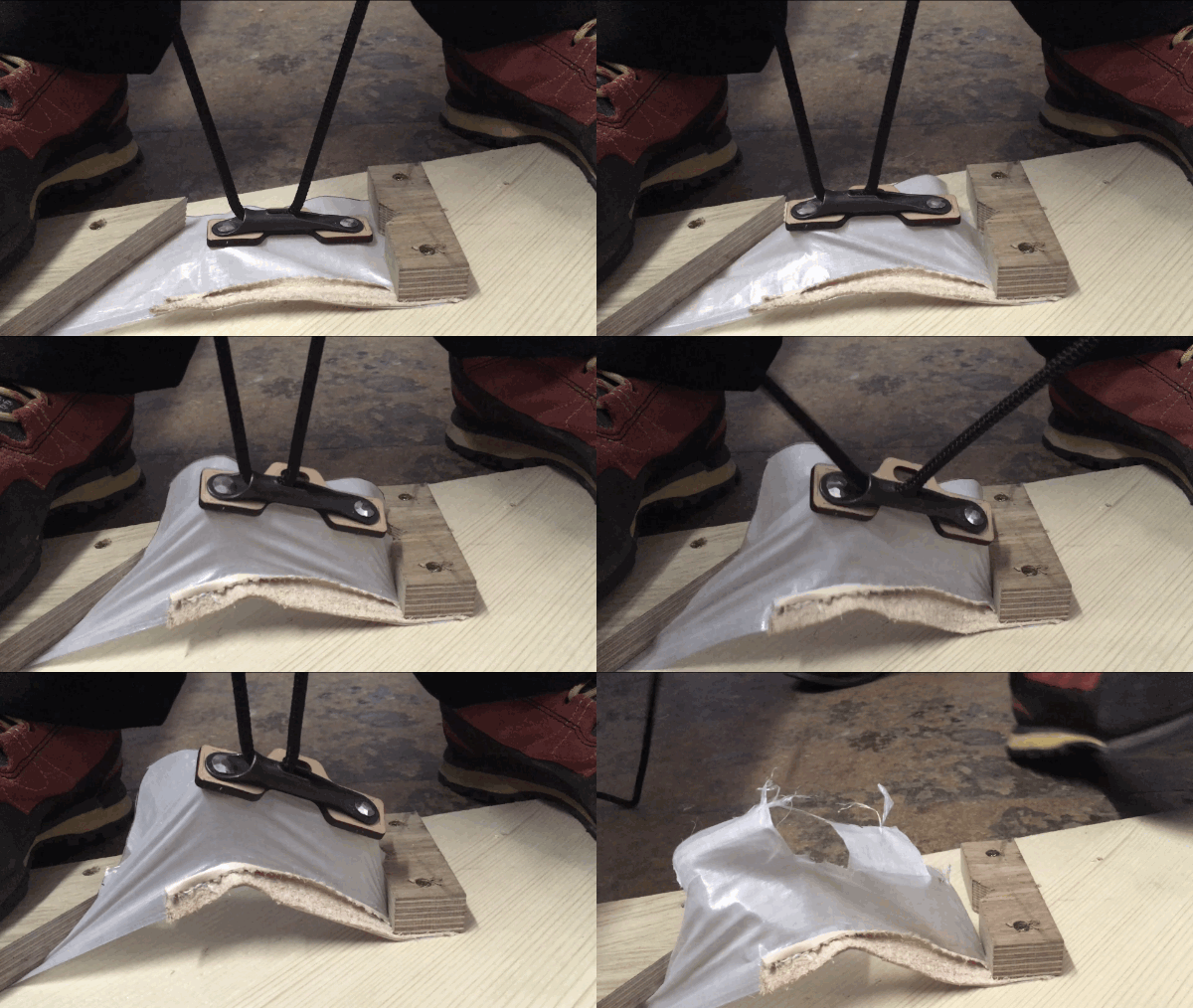
A process of substracting and highlighting certain details gave us the chance to create an open look and feel of the staircase. Integrating it harmonically rather than increasing it’s own presence we replaced the banisters with tennis-racket string, the removed first landing to give way for a big block of marble, handrails were “bent” and a high gloss varnish to finish.
photography: Colin Ross
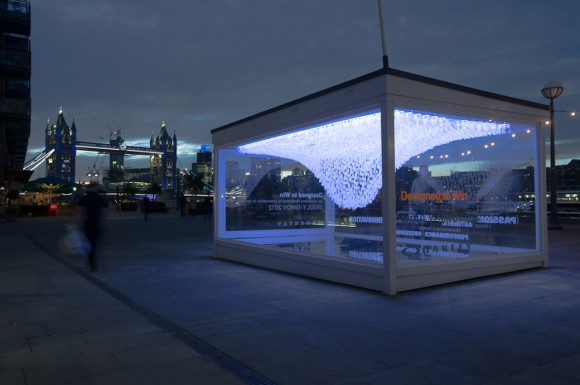
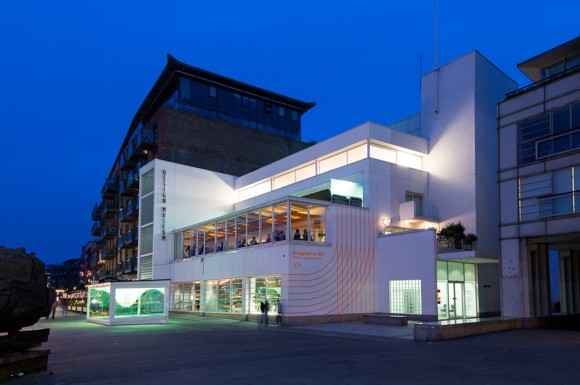
Completed - thanks to your help David - an installation at the DESIGN MUSEUM LONDON. 2000 Oakley Frogskin sunglasses suspend in liquid shape for the DESIGNED TO WIN exhibition and the Olympics London 2012. (photos: Russ Hennings/Oakley)
‘Hama ned z’vui - Drong ma ned z’schwaar’
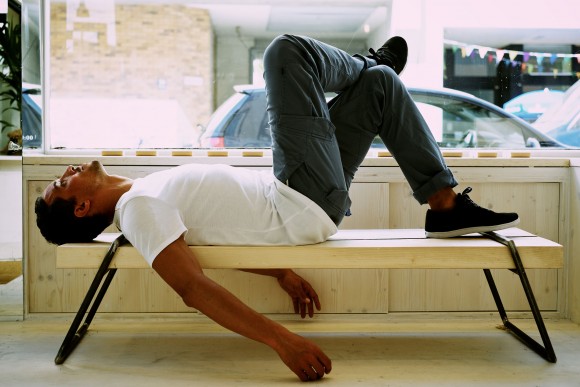
‘Hama ned z’vui - Drong ma ned z’schwaar’ or the notion of ‘living the lightness of not having a lot’ is the perspective of two distant worlds boiled down in a set of tools to venture into the pathless. Familiar settings, but estranged by denormalized objects - the ‘space-tools’ intend to offer the participant of the urban reality experiences that at least foster thought and at most create self-awareness, consciousness and have an impact on human behaviour. As ‘thinking-spaces’ they aspire to introduce different values and meaning to life in the urban society.
Watch the video here.
See also: http://livingthelightness.tumblr.com
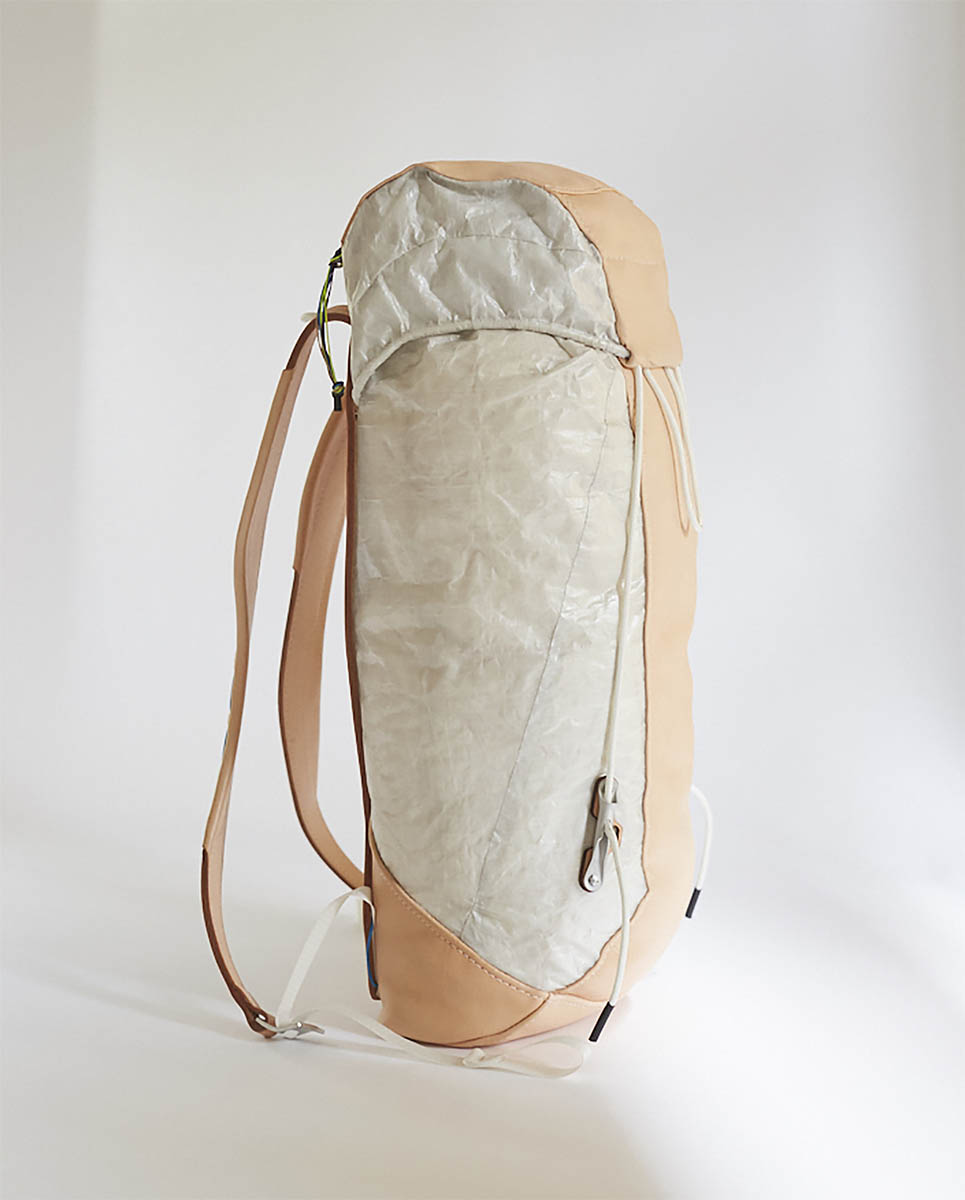
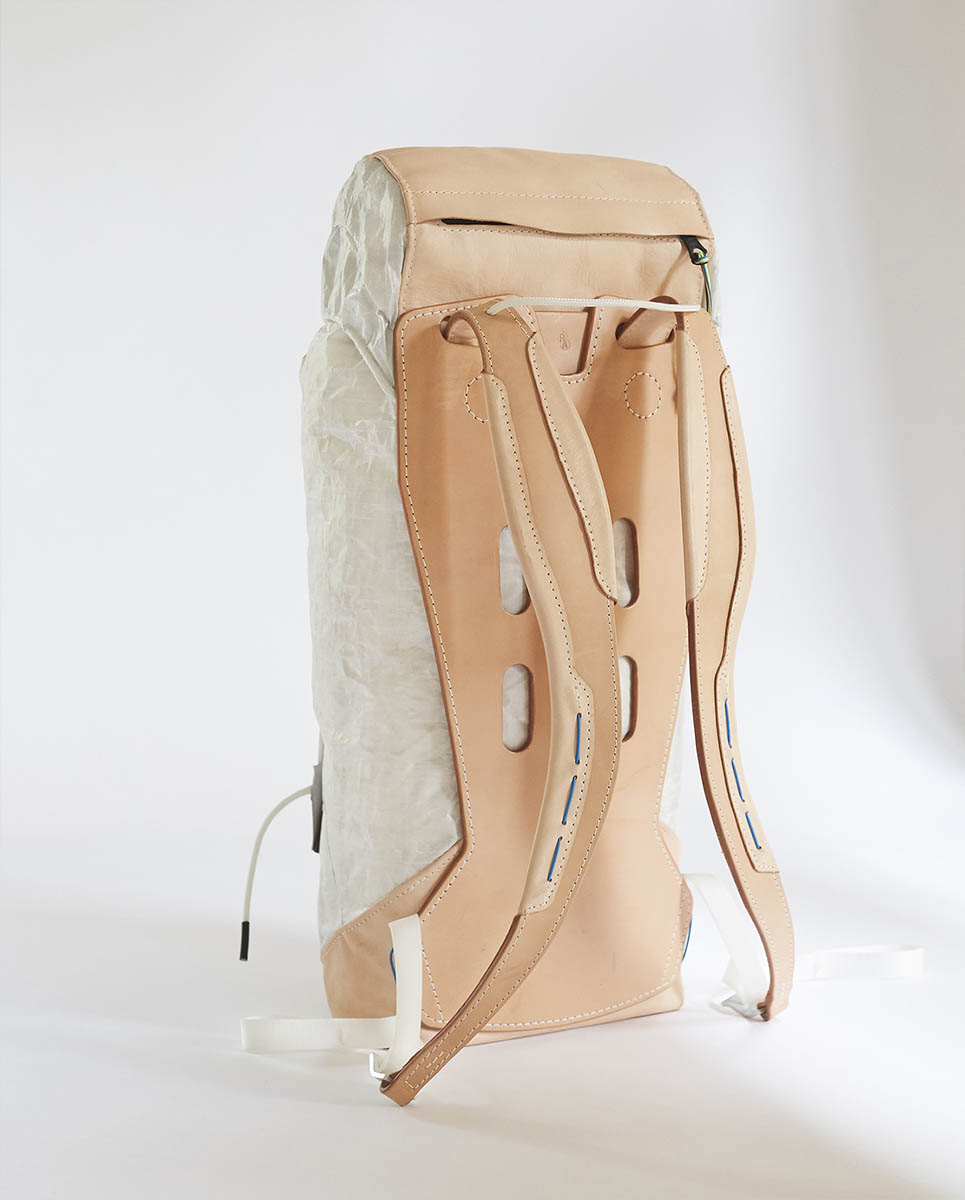
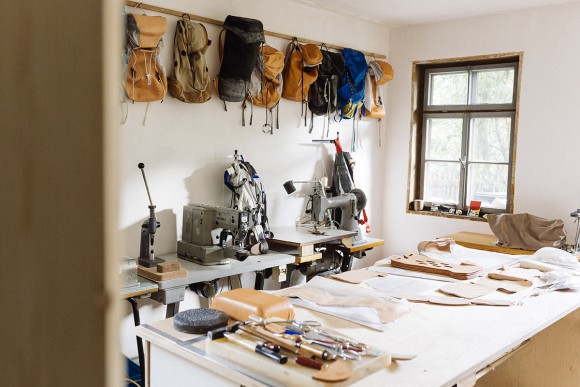
THE KRAXN - part of my MA final project. An investigation of who I am, where I am and what do I need?
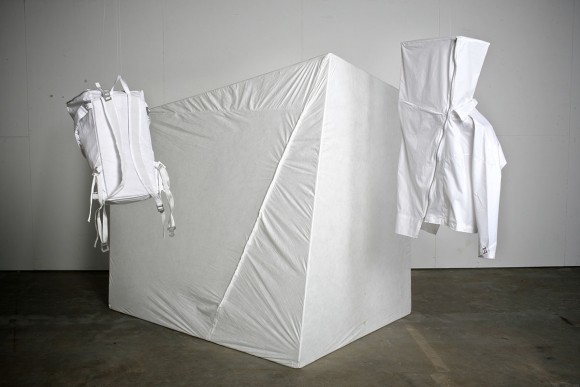
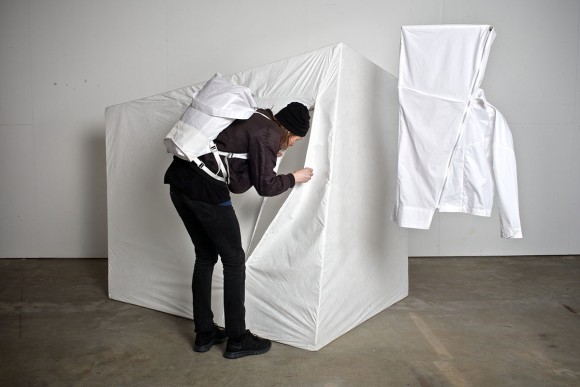
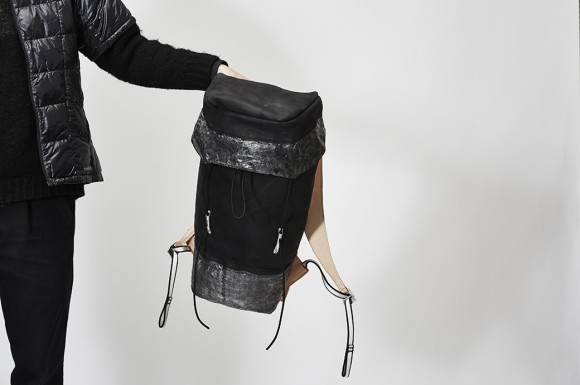
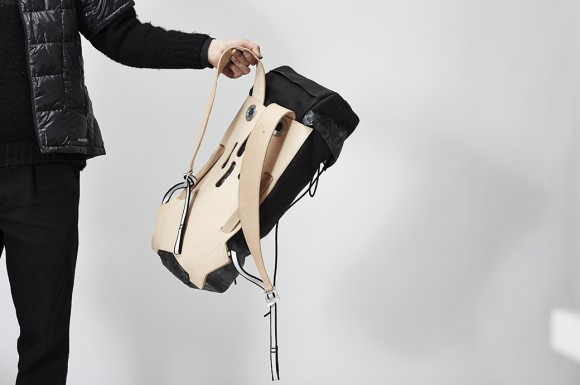
A Kraxn - a framed backpack that is used to carry heavy loads into the pathless is combined with a parasitic shelter that is supposed to hang in the urban landscape.
watch the video here
And - a few words why we need the KRAXN and the urban, hanging shelter to live in:
‘TOOLS FOR ANOTHER EVERYDAY EXISTENCE’ FOR THE URBAN REALITY
Life in the city - a big social dystopia? It requires adaptation, rituals & rules - binary or emulating. The result - a generic mush moving & behaving in similar patterns , like a flock of birds moving agravicly through the sky. The impulse/the drive, not the warm climate of Afrika, but the social structures of the metropolitan life - maybe capitalism.
Over the last decades due to new technology, new media, time & space have shifted “from the classic spacial configuration of the environment (urban, domestic) to a concentration on one point - the urbanite(user), who is, from this akinesic/static point, empowered to individually controll all aspects of this convenient life. The distant is now centralized around the individual. Email, smartphone etc. are only tools to handle this intangible concentration - of data (0s & 1s).
Not only has this concentration converted work from labour intense, machinery, industrial work to a static workspace centralized around desks in office buildings - virtually connected to the whole world, but it has also found its way into the domestic life of the metropolitan dweller. The urbanite’s everyday existence is challenged and influenced by social structures, norms & rules - trends that need following, & the empowerment (above mentioned) is just enough to control all these “metropolitan constraints”, pretending individuality. What emerges out of this is a uniformity/army of individuals - all being the same. Most obvious results are conspicious consumption, unawareness of environment & personal need (basic & extended) & overall consciousness of self (identity).
If this ‘concentration on the static’ around the individual has conquered the working environment & dramatically changed it’s principles of operation, is the domestic environment potentially the only retreat from this unconscious metropolitan reality?
Is it possible to imagine ‘another everyday existence’ (domestic) which refocuses on reality in space & time? One that gives the urbanite an opportunity , a space (by all means) to ground himself to a ‘real way of living’ which exists in parallel to the ‘flock-like’ metropolitan structure, which generally is not to be questioned - but to be followed?
This ‘real urban existence requires, but hopefuly moreover enhances “values’, ideas (artefacts & ceremonies/rituals), ethics & aesthetics. As ‘another existence’ it can be imagined as a space in which the ‘user’ is part of its physical characteristics, & moves around in it & also with it in direct physical/analog interaction.
The aim: becoming(remaining) aware of self(identity) and the environment by being directly exposed to personal basic needs & practices, but also external forces/agents like infrastructure, architecture, time (seasons, days etc.) & climate.
The result of this imagination, in combination with researching the ’vernacular’ & the remote life in the Swiss Alps, can be seen as a set of tools which, as a collective, forms this ‘ other everyday existence’ in the urban domestic reality.
See also: http://livingthelightness.tumblr.com
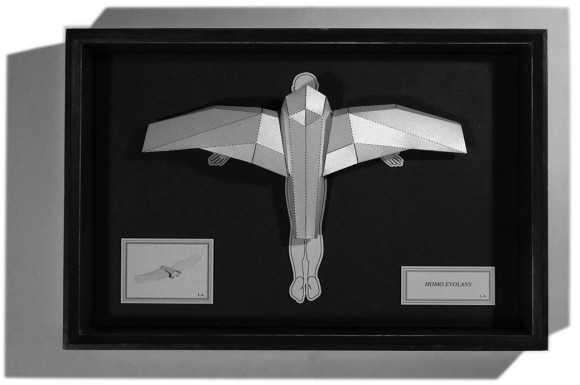
HOMO EVOLANS - the BA venture into the dream of being able to fly. An excerpt of the essay.
FROM ME TO MYSELF &
ALL THE OTHERS
Sir Francis Bacon says, ” Knowledge and Human Power are synonymous.”
Unlike most other mammals, Homo Sapiens, the human being, is capable of development far beyond his basic needs. On the assumption that the hand axe represents the foundation stone of human development – followed by the wheel and countless other inventions – mankind has advanced since then not only technically but also socially and in the humanities.
If we believe Sir Francis Bacon’s statement, then our consistent technical and evolutionary advancement also means a constant advancement of our HUMAN POWER.
In 1865, the French author Jules Verne wrote about his experiences of a voyage to the moon.
On July 20th 1969, the American atronaut Neil Armstrong, the first man to step on to the moon from the spaceship Eagle, radio-ed down to Earth: “That’s one small step for man… one giant leap for mankind.”
Of course we know today that for technical reasons it would have been impossible for Jules Verne to travel to the moon and back. It is nevertheless remarkable with what attention to detail and technical precision Jules Verne imagined what travelling to the moon would be like.
When I look up at the moon -144 years after Jules Verne’s journey to the moon and 40 years after Neil Armstrong rammed the American flag in its dusty surface – I find it difficult to grasp that anybody ever made it there and back in one piece.
Where on earth does this thrilling idea of travelling to the moon come from? If I put myself in Jules Verne’s place, I would dare to maintain that it was his very own personal dream to stand on the moon, his vision of how he could reach this so very distant destination. Neil Armstrong, on the other hand, is the personification of a public dream, a dream driven by scientific research and ideology, but probably mainly fired by a society hungry for prestige and honour.
In spite of the enormous difference in execution, it should be pointed out that Jules Verne succeeded in travelling to the moon and back even though he was never actually there.
The commitment, the will-power and the energy – whether in Verne’s or Armstrong’s case – invested in a successful journey to the moon seem boundless and possibly incomprehensible to the outsider.
HUMAN POWER – there are thousands of examples of it to be found in history and some of these will now be briefly exemplified.
The Pyramids of Gizeh in Egypt are one of the the oldest examples of HUMAN POWER. Built between 2620 and 2550 BC, they are still proof today of what a functioning society and intact nation is capable of. Muscle power and technical understanding made it possible for stone blocks, weighing tons, to be transported from the nearby Makkatam Mountains to Gizeh and to be positioned in a height of 146 metres. For decades a society was organized with HUMAN POWER in terms of mastery and control. Even today, it is not entirely possible to explain all the details of the building of the pyramids. Former knowledge and skills have fallen into oblivion and the incomprehensible dimension of these structures seems to make an exact reconstruction impossible.
In mythology, the ancient Greeks conquer Troy with an enormous, wooden horse and win the Trojan War. According to accounts, Hermes, the messenger of the gods, swung himself up into the sky with winged sandals and helmet. In his youthful recklessness, Ikarus flew to his death. In spite of the warnings of his father, Daedalus, he flew too close to the sun, causing the wax of his wings to melt; he plunged into the sea and drowned.
In 1864, the CSS LH Hunley, the first-ever manned submarine, sank after its maiden manoeuvre. The 8 metre long, cigarre-shaped submarine, just big enough to accomodate the crew of nine, sank in 1864 off the South American shore. The following will demonstrate why the CSS Hunley can be ascribed to HUMAN POWER. Firstly, it is obvious that the submarine is muscle powered by the 8 seamen cramped in the boat, sitting alongside a long crankshaft, turning the propellor. Secondly, it cost Horace Lawson Hunley, the engineer of the submarine, enormous effort, sweat and the loss of life of the crew members during the first test run. But it is also HUMAN POWERED because ist was developed and used solely for military purposes – HUMAN POWER in terms of omnipotence and control.
Towards the end of the 19th century, the young Brasilian Alberto Santos Dumont travelled to Paris to study. Fascinated by ballooning which was just becoming popular at the time, he ordered the first ever one-man balloon, thus laying his foundation stone in aviation. In the context of individual flight he developed the one-man balloon further to various motorised dirigibles and became the ‚Pioneer of Aviation‘ in 1900. In everyday use he tied his airships to trees or street lamps on the Champs Elysée while having a coffee with friends in the nearby Maxim.
It was HUMAN POWER that motivated Otto Lilienthal time and again, even after failure, to continue working on the development of flying and to achieve gliding periods of remarkabel duration; he set the cornerstone for future achievements, such as that of the Wright brothers who became the first men in history to fly successfully with a motorised plane, heavier than air.
At the Olympic Games in Beijing in 2008, the Jamaican sprinter Usain Bolt broke the 100m and 200m world records. Countless hours of training, motivation and will-power made Usain faster than the rest of the world – so fast that he was even able to enjoy the last few metres of the race while crossing the finish line!
What is it that spurs us on to such enormous achievements?
Whether the wheel is an invention of Homo Sapiens or not is not particularly important here; more to the point is what preceeds all our inventions and developments. What motivates human beings to invent and develop?
Is it simple need, the benefit or the dream that we long for? The dream as prediction or as a wish? Or is it the seemingly unrealistic fantasy of scientists – often derided by the rest of society as crackpots?
Let us get to the point: what does HUMAN POWERED really mean? HUMAN POWERED is not only muscular power but far more an idea, will-power, vision and passion. But mostly it is the belief in oneself and ones dreams plus a visionary ability.
As it emerged during intense research that there are many interesting examples and personalities in the history of flying to be found in terms of HUMAN POWER, the following essay is an attempt to demonstrate what qualities and characteristics it takes to be able to swing oneself up into the air, free as a bird. The development of Homo Sapiens to Homo Evolans.